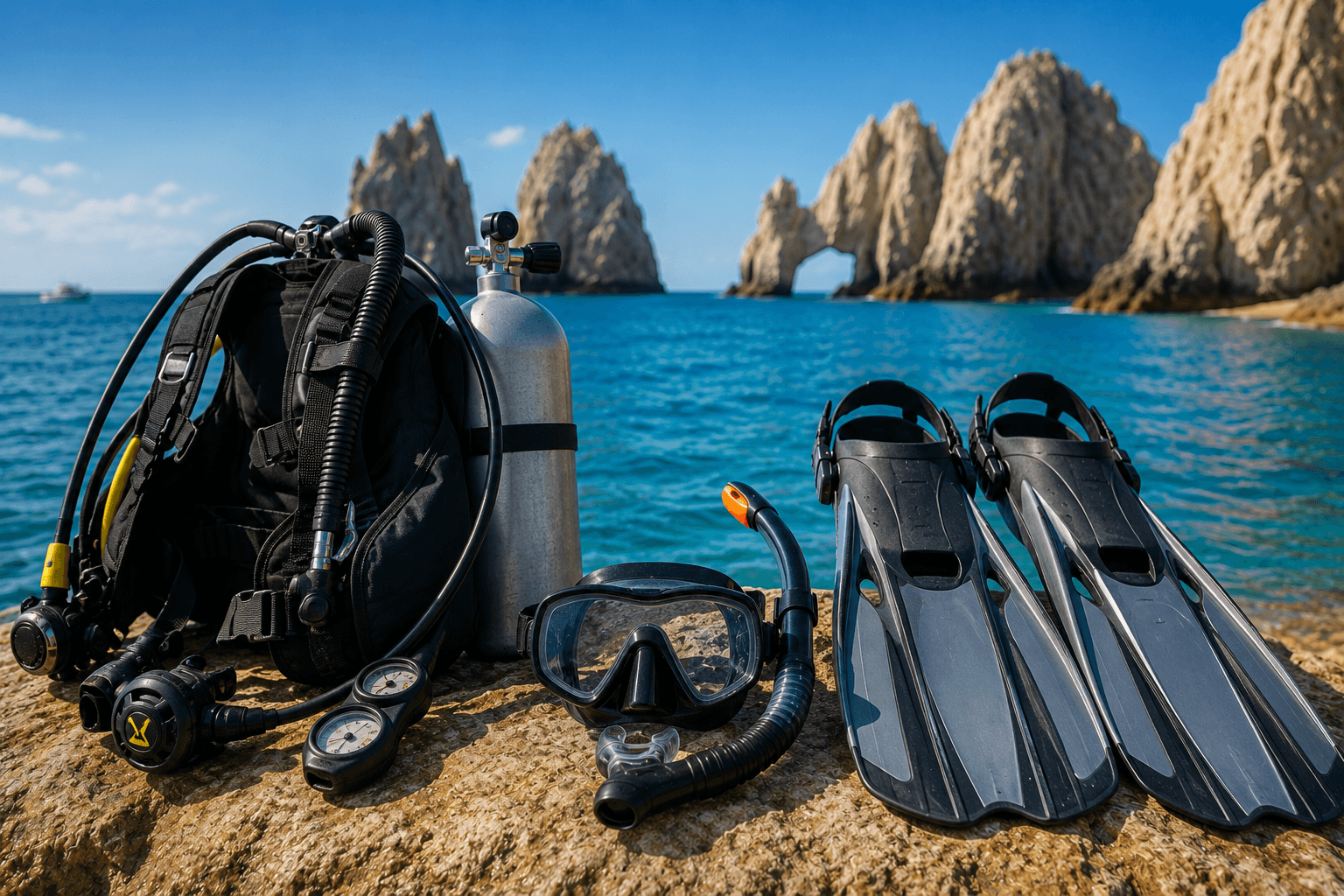
Where the Pacific Ocean collides with the Sea of Cortez lies one of the most biodiverse marine environments on the planet. Famed marine explorer Jacques Cousteau famously dubbed the Sea of Cortez “The World’s Aquarium,” and nowhere is that title more evident than off the shores of Baja California Sur.
Whether you are seeking your very first underwater breath or are an experienced technical diver hunting for pelagic shark encounters, scuba diving in Cabo San Lucas delivers unmatched access to world-class marine life, dramatic topography, and crystal-clear waters.
Why Dive in Cabo San Lucas?
Unlike many tropical Caribbean destinations characterized by slow-sloping coral walls, Cabo’s underwater world is dramatic, physical, and teeming with ocean megafauna.
- Exceptional Biodiversity: Over 800 species of fish and marine mammals inhabit the local waters.
- Varied Dive Environments: From protected marine parks five minutes from the marina to offshore sea mounts and UNESCO coral reserves.
- Year-Round Diving: Water temperatures range from $68^\circ\text{F}$ in winter up to $86^\circ\text{F}$ in late summer, with visibility reaching over 100 feet during peak months.
Top Dive Sites in Cabo San Lucas & Beyond
1. The Cabo San Lucas Marine Park (Local Sites)
Located just 5 to 10 minutes by boat from the main harbor, the Cabo San Lucas Marine Park offers accessible, high-reward diving suitable for all certification levels.
- The Sand Falls & Pelican Rock: Discovered by Jacques Cousteau, this famous natural phenomenon features cascades of sand pouring down 90-foot underwater granite cliffs like subterranean waterfalls.
- Land’s End & Neptune’s Finger: Dive right beneath the iconic Arch where the Pacific Ocean meets the Sea of Cortez. Expect frequent encounters with playful California sea lions, moray eels, and mobula rays.
2. The Corridor Dive Sites
Stretching between Cabo San Lucas and San José del Cabo, the Tourist Corridor boasts calm conditions, reef structures, and abundant macro life.
- Chileno Reef & Santa María Bay: Ideal for beginner divers and underwater photographers. Shallow reef systems host sea turtles, parrotfish, pufferfish, and sea fans.
- Whale’s Head & Blow Hole: Dramatic underwater swim-throughs and rock formations featuring gorgonians and resting bat rays.
3. Cabo Pulmo National Marine Park
A 2-hour drive north to the East Cape brings you to North America’s oldest living coral reef system. Protected as a national park since 1995, Cabo Pulmo is famous for swimming among massive schooling jacks numbering in the thousands, sea turtles, and resident bull sharks.
4. Gordo Banks (Advanced Pelagic Diving)
For deep-certified divers, this offshore sea mount rises from the depths to around 110–130 feet. High currents make it challenging, but the reward includes encounters with scalloped hammerhead sharks, silkies, whale sharks, and pelagic rays.
Choosing Your Diving Experience
- Discover Scuba (Beginners): No prior certification required. Short pool instruction is followed by a shallow guided open-water dive in the Marine Park.
- 2-Tank Guided Dives (Certified): Standard morning or afternoon charters visiting local sites or Corridor reefs.
- Private Boat Charters: Tailored itineraries for private groups, multi-day expeditions, or underwater photography focus.
Plan Your Luxury Dive Escape
After a day of exploring deep ocean trenches and swimming alongside marine life, returning to a private sanctuary completes the ultimate Baja holiday. Pair world-class underwater adventures with high-end, fully staffed villa accommodations in Cabo’s most exclusive gated enclaves.
To reserve private charters, arrange certified dive masters, or review specialized gear rentals and luxury stays, explore scuba diving in Cabo San Lucas to organize your bespoke itinerary.